

Mākereti Papakura
Oxford’s first female Indigenous scholar.

Nā aku akoranga
Ka tau tōku wairua
Nā ngā tohu o te wā
Tohu waiwaiā
Ko mahurutanga
(Translation into English)
Every lesson brought me here
Where my very soul resides
Every season was a sign
Beautifully designed
To give me peace of mind
Song: Luke Whaanga with lyrics in te reo Māori by Eugene Temara.
This morning, I was looking for a different topic to cover - something that wasn’t about killing or divisive politics, but a positive, interesting story to learn about.
I might have missed this in the NZ media, seeing it in the Guardian this morning was the first I’d heard of it, and it caught my eye.
What an incredible thing to do, all that time ago, to travel from Aotearoa to Oxford to undertake a degree at that prestigious, perhaps the most famous, university across the world.
I’ve always been fascinated by indigenous people travelling to the colonial country that turned their people’s lives upside down and making their way in it.
This story begins in Rotorua, where I’m from, and takes us to a distant land where many of us have ancestors. Mākereti Papakura was raised around the geothermal area of Whakarewarewa and worked as a guide.
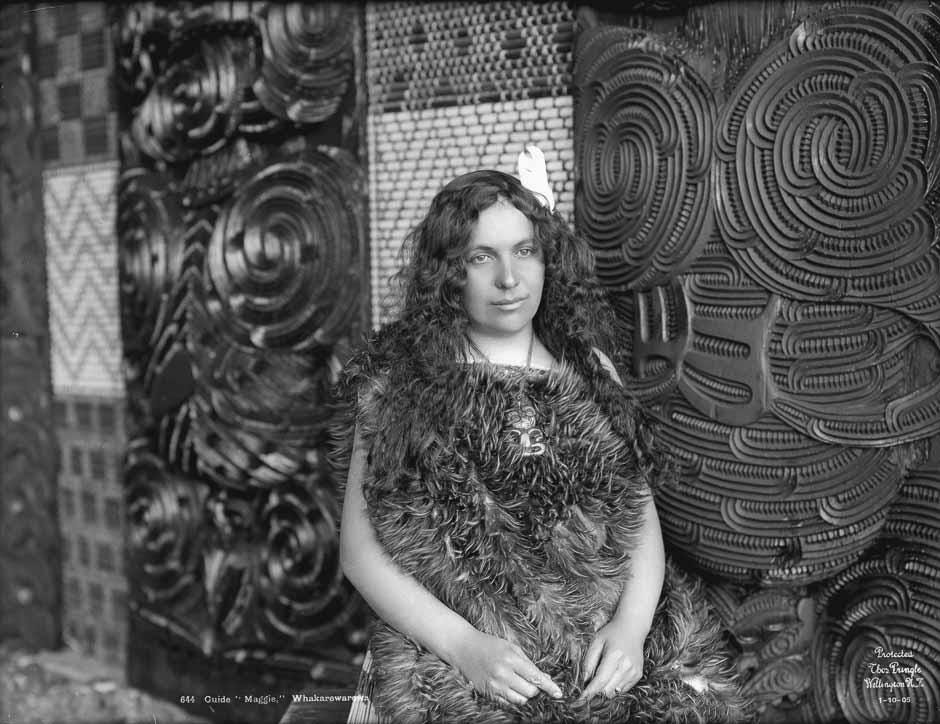
If you’ve been to Whaka, as it is known locally, you might recall the bridge that crosses to the village from which local children used to dive for coins. On the stone wall beside the bridge are images of the guides, who were a notable feature of early tourism in the area.
These are the lands of Te Arawa, and I recall as a child my father, who was the curator of the Rotorua Museum, assembling the Arawa Hall gallery, which opened in 1987. The gallery focused on the legends, history, artefacts, and carvings of the local tribe.
My job was a well-deserved punishment for getting into trouble, although it doesn’t feel like one now, and involved cleaning the carvings with a toothbrush to avoid damaging the centuries-old details.
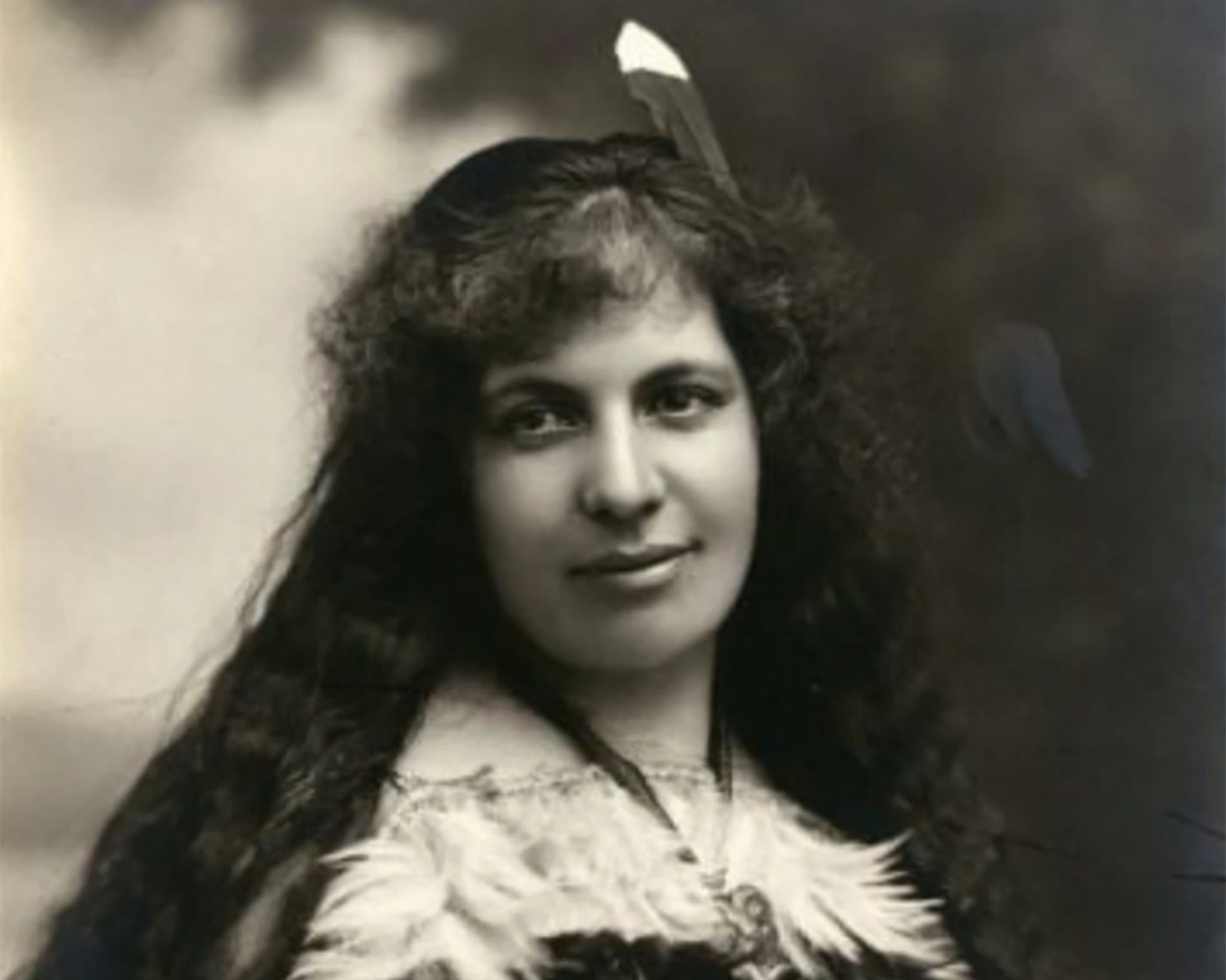
In terms of her own land and time:
“Papakura grew up during a time of significant change for Māori, including the rapid loss of land, language and Indigenous knowledge as the grip of colonisation tightened.”
After enrolling at the University, Mākereti spent years “writing her detailed knowledge of genealogy, histories, language and customs on thousands of sheets of paper, recalling the ancient traditions of the Arawa people.”
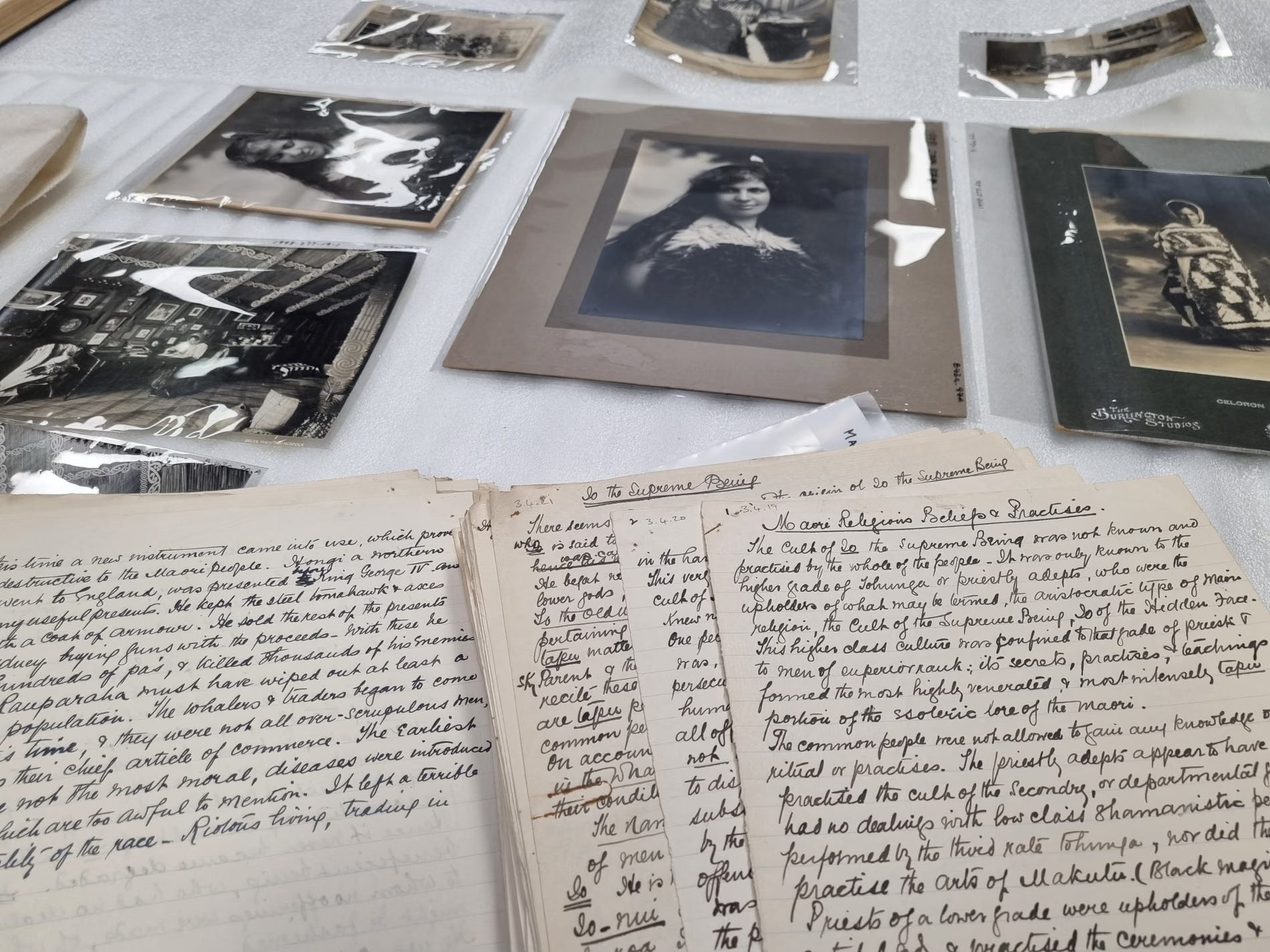
As the Guardian article notes: “Remarkably for the time, it was a detailed work about Indigenous people, by an Indigenous woman.”
Sadly, Papakura died in 1930, just three weeks before her thesis was due, aged 56. In recent years, the family have requested that a posthumous degree be given to acknowledge her work.
Almost a century later, Mākereti was recognised, and at a reception with the family at Oxford’s Pitt Rivers Museum on Saturday, the vice-chancellor, Prof. Irene Tracey, said it was an honour to acknowledge Papakura’s influence as a scholar.
“I could not think of a person – globally, historically – more worthy of that honour,” she said. “At a time when so few women came to Oxford, so few women did degrees.”
A delegation of Te Arawa travelled to Oxford for the commemoration. Elder Anthony Wihapi said of the University, “It’s existed for 900 years, and I’m told this is one of the first times they’ve awarded a posthumous degree. It’s an incredible thing for our [family] to be proud of.”
“Papakura was posthumously awarded an MPhil in anthropology for her work documenting the life, language and customs of her Te Arawa people.”
I’m glad to see this recognition even after a century. It would be wonderful to see a documentary of Mākereti’s work. What a treasure of history she has left us from a period and perspective that would have been lost without her work.
What an incredible woman to undertake such a challenge, and I’m pleased for her descendants to see this degree awarded posthumously even after all this time.
Ngā mihi,
Nick.
To end here are Luke Whaanga ft Origin Roots - Ūkaipō, set at Whaka, you might notice the photos of the Māori guides early in the video.
Thanks for this Nick. I remember her portrait - she was such a beautiful woman. She needs to be remembered for her incredible intellect and persona.
Thank you Nick for highlighting this wonderful woman and her work. I guess it is understandable, however I find the older I become the more history of Aotearoa I learn. Wish I had learned so much more so much earlier.