

Thinking Big
Building white elephants in the 'Naki.

Well, he feels like an elephant
Shakin' his big grey trunk for the hell of it
He knows that you're dreamin' about being loved by him
Too bad your chances are slim
Songwriters: Jay Watson / Kevin Parker.
I’m starting to think that Christopher Luxon is turning into Rob Muldoon, and I’m not talking about the growing similarities, be they facial or physical, but rather their approach to problems.
Muldoon had real problems. The oil crisis of the 70s saw inflation and energy prices soar, and so he froze prices and gave us car-free days, but that wasn’t enough, so he took matters into our own hands and decided to Think Big.
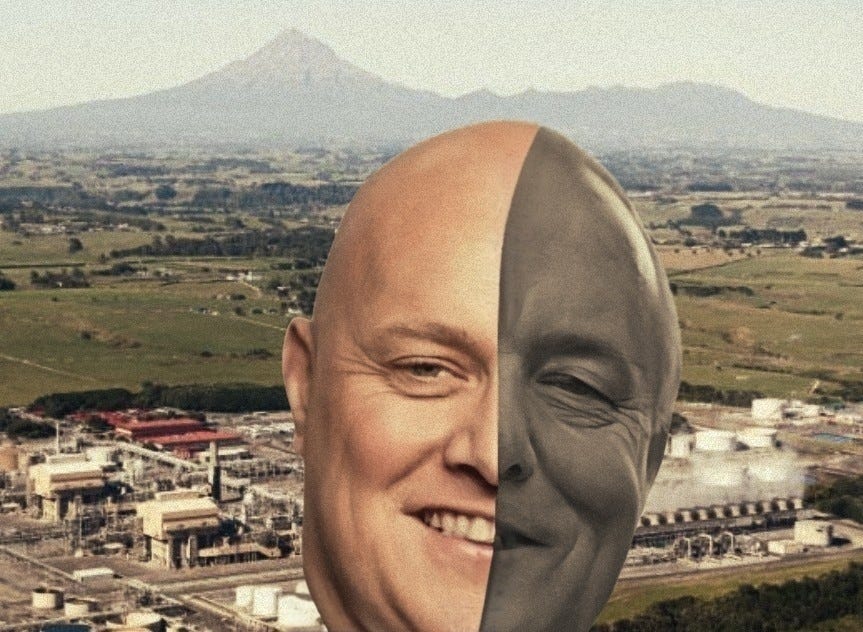
Luxon may not have an international crisis to deal with, but our Finance Minister’s capabilities mean he faces higher prices, higher unemployment, and an electorate later this year that will be less than sympathetic, given that things have actually gotten worse across the board rather than better.
He needed a circuit breaker, something to lower household costs, to provide jobs, and help win an election, and so Christopher Luxon, like his doppelganger predecessor, is Thinking Big.
But will the development of a new LNG terminal save Kiwis money and future-proof our energy needs, or is it a White Elephant that will have future generations asking, “What the hell were you thinking?”
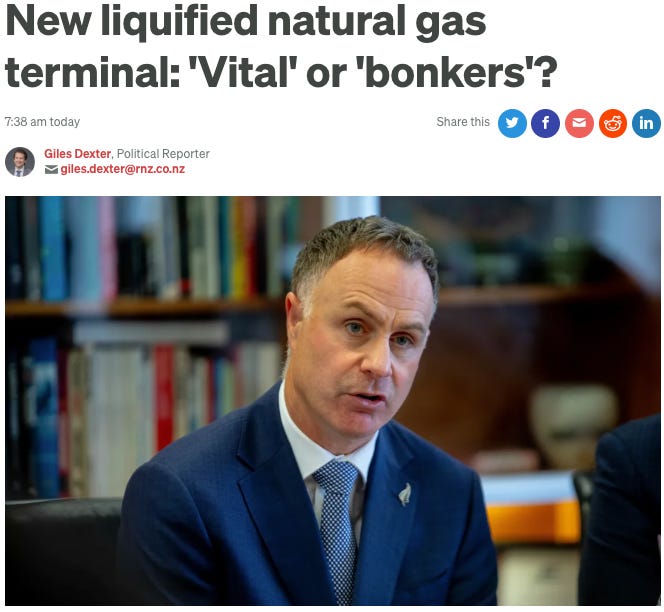
The government’s argument is basically that, with some renewables being dependent on wind and sunshine, we need to build natural gas reserves so we can utilise them when electricity demand exceeds supply, and the electricity companies increase their prices to make hay while the sun don’t shine.
John Carnegie, chief executive of industry body Energy Resources Aotearoa, said, “LNG can be expected to take the heat out of the electricity market when renewable fuels like wind, water, and the sun don't turn up when they're needed. It will place downward pressure on wholesale electricity prices and reduce the risk premium in the out years.”
Basically, storing this LNG is an insurance policy for when we need it. Ideally, we’d move to use renewables as soon as possible, but in the absence of intent to undertake such forward-thinking work, we’re going to increase our capacity to weather shortages and avoid price spikes.
ACT's energy and climate change spokesperson, Simon Court, said, “Labour promoted the view that gas is something to be ashamed of. It's not. Gas is a practical, reliable option when hydro lakes are low. Gas keeps factories running, heaters humming, and lights buzzing. And the environmental case for gas is strong too, because when we can't burn gas, we burn coal.”
Still, it’s better than having a fallback of Indonesian coal, right? That old chestnut that the coalition throws at more progressive parties if we don’t transition to clean energy overnight.
Except it’s not; in fact, studies show that the Liquefied natural gas carbon footprint is worse than coal.
Don’t worry about climate change, the government sure won’t be. This is about reducing costs for households, based on yesterday’s poll from the TPU/Curia, which showed that “Cost of living remained the most important issue, jumping 7.4 points to 34.9 percent; the highest result since May 2024.”
So, will we save money with this change?
The short answer is ‘no.’ During regular usage, without excessive demand, this will not change the astronomical cost of your bill, but it will insulate you from the worst price spikes when there is not enough power on the grid.
OK, but at least it won’t cost me money, right?
I’m afraid that’s a ‘no’ again. Even if you’re cynical about such companies passing on savings to consumers in lower bills, there is still the small matter of funding the LNG terminal, which will cost, and you might like to say this in a Dr Evil voice with a little finger placed in the corner of your mouth - one billion dollars.
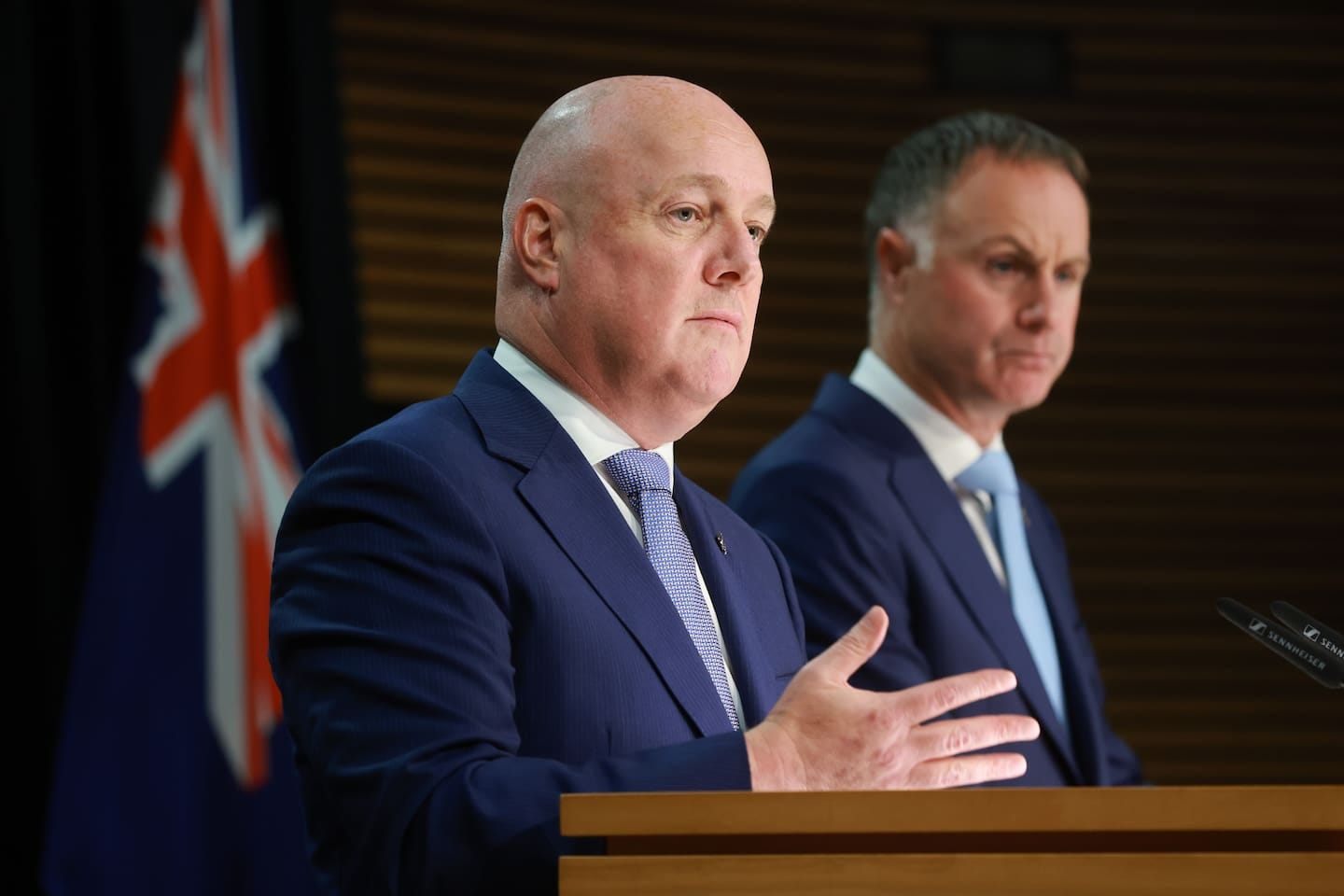
Yowsers, Batman, that’s a heck of a lot of savings that would need to be made as a result, but where will the government get the money? Maybe they could call it a “road” and get funding that way, no questions asked, but anything else - well, good luck getting a billion dollars out of Nicola.
Don’t worry, the government will raise the money with a levy.
Great, but isn’t that just another name for a tax? I thought these guys were about decreasing taxes, not throwing another billion dollars on the bonfire of state spending. David Seymour will have kittens, not to mention the TPU.
When Labour is in power, this would be called a tax, and they’d be beaten over the head with it for misleading the public about not introducing any new taxes, but under National, it’s simply a “levy”.
I’m not really sure how that works, but have you seen this quote: “You don't make electricity bills cheaper by taxing them. Dancing on the head of a pin over what is a tax and what is a levy is a Labour Party talking point. Luxon should spare us the spin and abandon this folly.”?
Sounds like some tree-hugging hippy, was it the Greens?
No, that was your mates, the Taxpayers’ Union. Still, I take it the experts think this is a good idea?
Well, praise for the plan is not universal. RNZ says: “A separate study by gas company Clarus, along with the four gentailers, found it was feasible but would likely be costly, and only needed occasionally.”
If I didn’t know better, I might think the government was building this primarily to benefit the fossil fuels industry, with taxpayers picking up the cheque and unlikely to break even for many years. Still, at least we’re actually building assets rather than selling them, which makes a nice change.
Well, it is an asset. Although if someone invested more in clean energy, it would become obsolete, and, of course, you can’t sell it, but it is an asset.
Yes, a really expensive one that will only benefit us while the government drags its heels on clean energy. Did you know that Greens co-leader Chlöe Swarbrick said the government was guaranteeing added costs to New Zealanders, while relying on "hopes, wishes, and prayers" for future savings.

You know if you stopped listening to RNZ and switched to ZB, you’d feel a lot more relaxed about these things; in fact, you might even become a convert.
Actually, even Ryan Bridge on ZB said, "You can't sell an LNG terminal once you're finished with it. These particular advisors made the point that it's quite a specific piece of kit and could well turn it into one of this country's biggest white elephant investments.” Do you know what else Chlöe said?
No, but I suspect you’re about to tell me, aren’t you?
Swarbrick also said, “It’s absolutely bonkers for power bills, for the planet, for our country’s energy resilience. The only people who want this are the fossil fuel industry and, seemingly, the National Party. Whatever claim, whatever remaining claim the Nats have to being economic managers is now, frankly, up in flames.
Honestly, it’s cooked. Christopher Luxon has once again chosen to throw New Zealanders’ money at fossil fuels, which is bad for power bills, energy security and the planet. This is Christopher Luxon’s New Zealand. Profits are flowing offshore, while New Zealanders are paying handsomely for it.”
I think we need to call security, it sounds like Ms Swarbrick has somehow gotten hold of the Cabinet briefing paper - and we can’t be having that!
Have a good Tuesday, folks. Take care, and whatever you do, don’t listen to ZB, it will make your brain smaller and turn it into mushy Weetbix.
Ngā mihi,
Nick.
To end today, here’s Tame Impala with Elephant:
Here's how to fix the electricity "market". The power companies all have executive teams, marketing departments and boards of directors. Amalgamate the companies which still have government ownership, clean out the expensive hangers on. Thank the private shareholders for the use of their money for the last few years, and tell them that dividends will be stopping. Put some of the money saved by these actions towards encouraging household solar installations, and the rest towards reducing the power price to households. These actions will squeeze the privatised power company.
Offer shareholders a staged buyback of shares, based on their purchase price, the value of dividends paid, and interest rates over the ownership period.
Nationalize the company's use the "levy" to fund solar and batteries for every house/building in the country and ditch the prices in 26